A Long Day on the Inside Passage
By M.E. Rostron
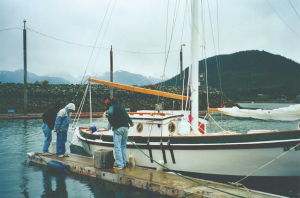
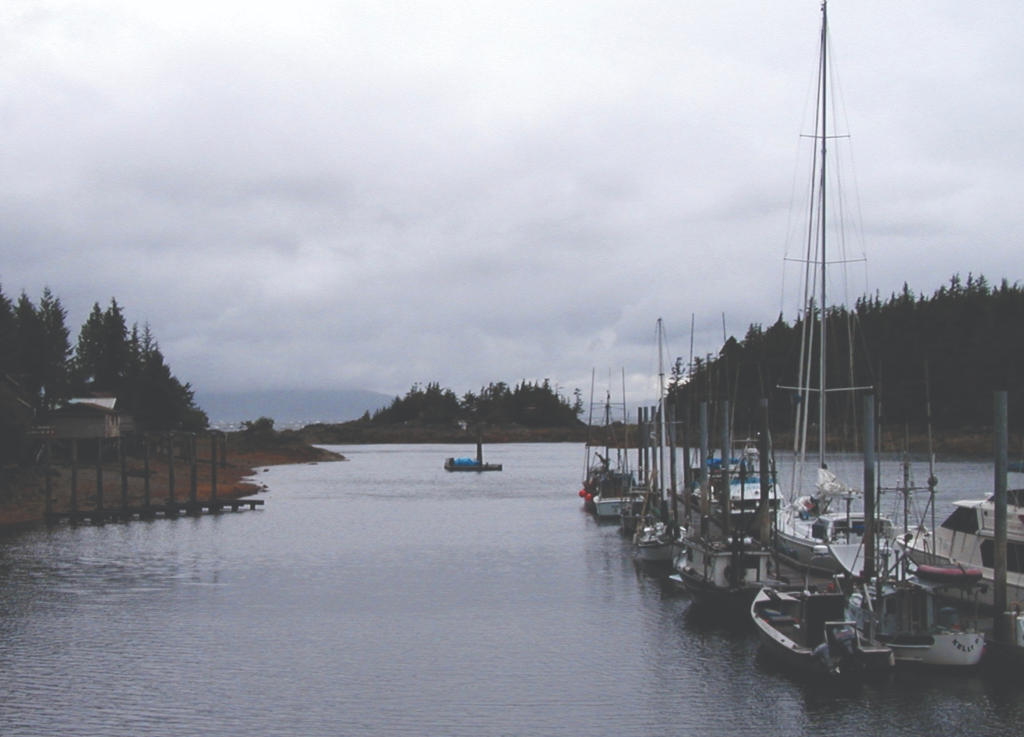
Daylight waned on Clarence Strait north of Ketchikan on Alaska’s Inside Passage. A building gale opposing the ebbing tide generated steep waves about thirty feet apart, the length of my self-constructed wooden cutter, Avalon. I’d been on the water all day, having set off from Wrangell that August morning on my way south from Haines, Alaska to Bellingham, Washington. I was tired and hungry, and it dawned on me I would never make port before dark.
Earlier I’d been satisfied at my progress, making four knots motor-sailing with a reefed main – not bad considering the sea state – when the motor coughed and sputtered briefly before quitting. The fuel tank was empty.
I had no fuel gauge. Until this voyage I had motored little, using the engine mostly to get out of the small boat harbors at Haines and Skagway before raising sail. After several years of sailing the waters of the northern region of Southeast Alaska, I’d put only sixty hours on the diesel auxiliary. I had underestimated how much fuel I would consume in continuous motoring against wind and tide. Two five gallon containers of diesel were lashed securely to the mast in front of the small deck house of my Buehler Emily Cutter, but with waves frequently breaking over the bow and flowing over the decks, there was no way to refuel without salt water entering through the deck fill.
I had to get the boat sailing faster to keep my ability to maneuver. The brutal crenellated shorelines of Etolin, Onslow and the hundreds of other islands and islets in this wild section of Southeast Alaska are notoriously hostile to unlucky boaters who venture in too close. The first Western explorer of the region, the Spanish captain Jacinto Caamano in the 1790s, had also noted that Clarence Strait (which he had named “Canal de Nuesta Senora del Carmen”) was an area of “extremely strong currents.”
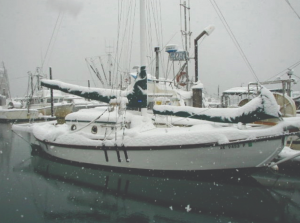
I unlashed the jib and hauled up the flogging sail while the tiller pilot held the boat steady. I’d built my double ender in Alaska of old growth fir and yellow cedar. Her mast was a Sitka Spruce, and she was traditionally rigged without headsail furlers. The sail flogged and snapped loudly as I tightened the halyard.
Back in the cockpit I winched in the sheet and headed off on a port tack. Most of the lee deck was underwater even with sheets eased, and it was evident the wind was still building. Damn! The staysail would have been a better choice. Weeks earlier I had rigged a downhaul on the jib at the advice of a fellow sailor, thinking it would prevent trips out on the “widow-maker.” Like many ideas it was good in theory, but in practice it was another line prone to fouling.
I put Avalon up into the wind again and let go of the halyard while pulling on the downhaul. The jib came down about half way and stopped. My shouted obscenities were less than whispers against the roar of the gale. I edged out onto the bowsprit and managed to drag the sail down to the foredeck, but not before I was dipped several times waist deep into the cold waters of the strait. Still, my adrenaline was keeping me warm and I quickly hauled up the smaller staysail. Though my speed decreased, the boat heeled less, was well balanced, and much more comfortable.
Click to read the rest of this story and see more great photos.