By Adam Cove
I’m not sure if it was adrenaline, not wanting to fall short of my goals, or knowing this unforgiving environment could kill me. I had to keep pushing; I couldn’t see another choice.
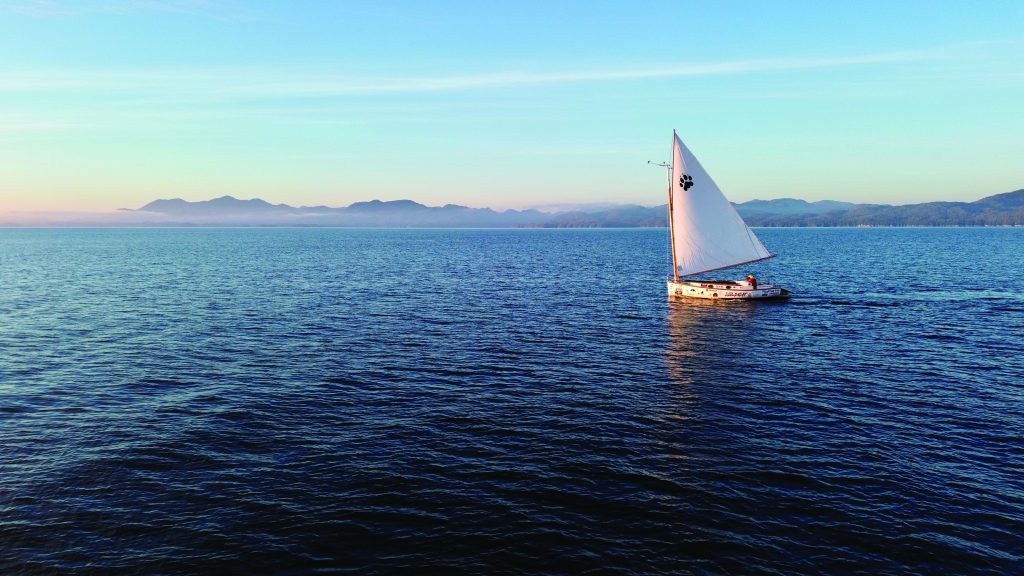
A couple hours earlier, I was short tacking through Johnstone Strait, where the snow-capped mountains rise steeply from the water’s edges and concentrate the wind. Precariously rooted conifers release an invigorating smell, and the short, steep waves assured 49-degree spray was driven across my cheek every few seconds. I was singlehanded, and Wildcat, my 18-foot Marshall Sandpiper catboat, was performing beyond my expectations, holding position against larger and fully crewed boats. But Johnstone was beating me up.
As soon as I had the chance, I let the current sweep Wildcat out of Johnstone and into Queen Charlotte Strait. At first, the waves were slightly bigger, but the period was more comfortable. Then they changed, and quickly. It didn’t add up, but that was the new reality.
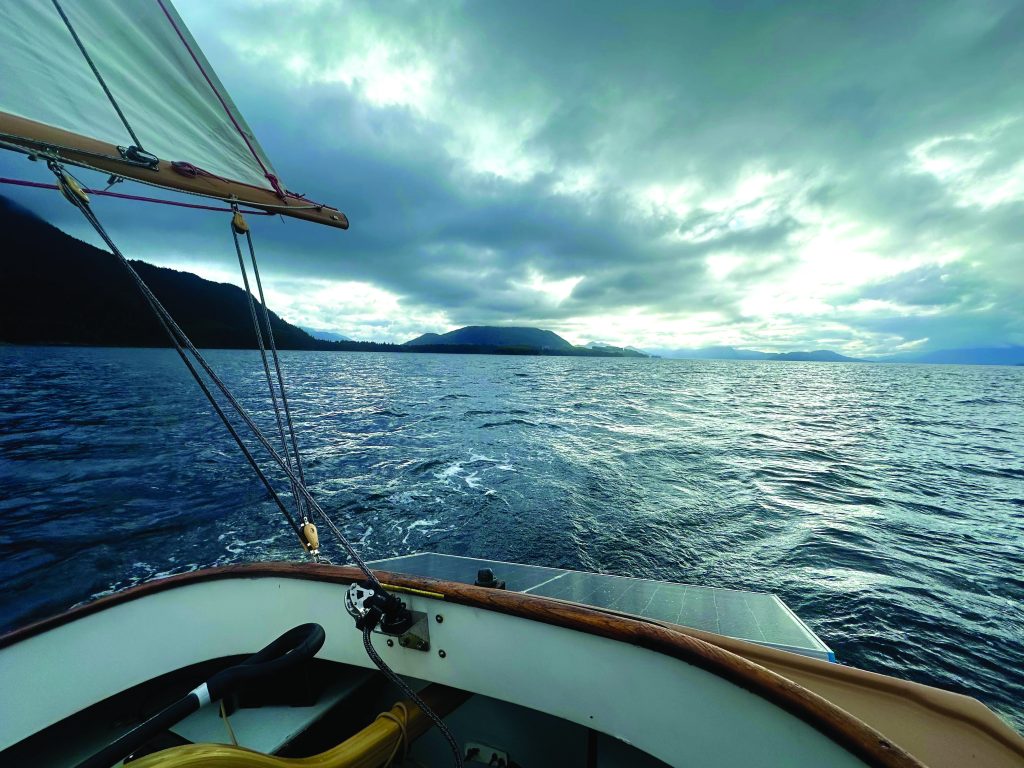
I was now facing 6- and 7-foot breaking waves. Each brought a few gallons of water into the cockpit. I was struggling to point; it took my full concentration to avoid being knocked over by the sea state. The breeze was still building, and I desperately needed another reef. For the first time in this race, I felt outmatched by the elements.
Welcome to the Race to Alaska (R2AK). The course traverses 750 nautical miles, or a little more than the entire western coast of Canada, from Port Townsend, Washington, to Ketchikan, Alaska. No engines allowed, no pre-planned support, but full creative license to develop any sort of wind or human-powered propulsion. First to finish gets $10,000 nailed to a log, second receives a set of steak knives. Everyone else who finishes joins a unique club with fewer members than the number of people who have been to outer space.
Interested in the full adventure?