BY DAVID BERSON
On my first trans Atlantic passage in 1975, aboard a 70’ McCurdy & Rhodes ketch bound for Malaga, Spain, from City Island, New York, I barely knew the difference between a boom vang and a boomkin. I had only just completed my first sailing class a few months prior and, though raised on the stories of Jack London and Joseph Conrad, had zero experience aboard a boat, unless you count the waterlogged raft we cobbled together as kids to cruise down the Bronx River. As crew, I was so green that one night alone on watch, with the wind abeam, a bright light appeared dead ahead, out of nowhere, low on the horizon. In a panic, I jibed, awakening the skipper, who, scrambling up on deck, reminded me, once again, at full volume, what a useless so-and-so landlubber I was. The light? The rising moon.
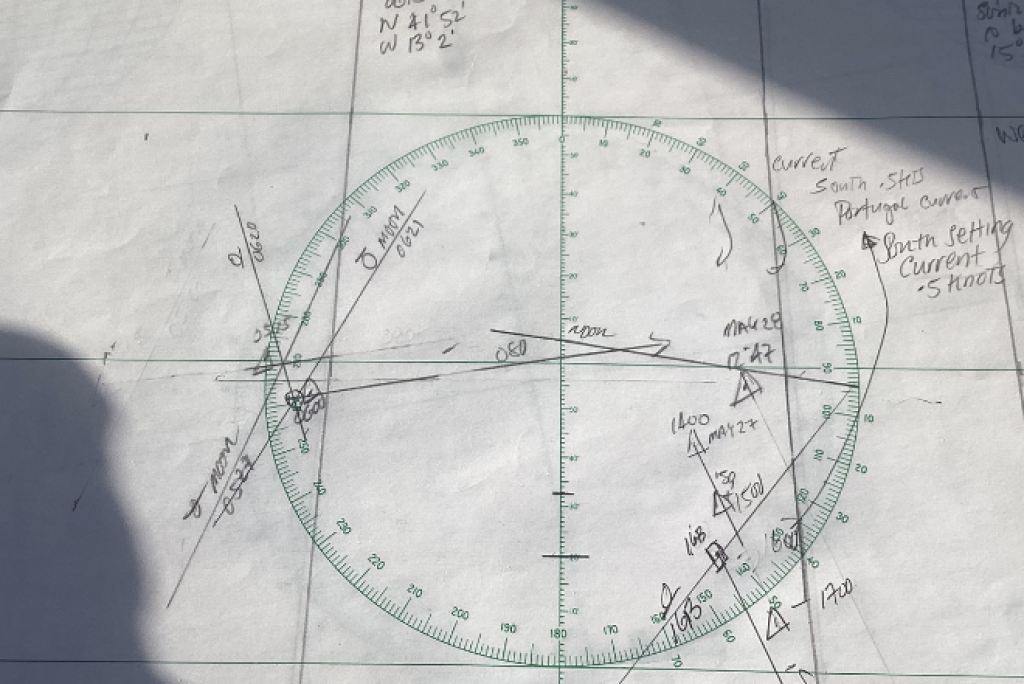
We found our way across the Atlantic Ocean with the help of a celestial navigator who had brought with him all the tables (HO229), paper charts, both the gnomic for great circle routes and mercator, and all the other paraphernalia associated with the craft — parallel rules, pencils, plotting paper, plenty of erasers, and of course a sextant.
In the mid-1970s, other than celestial navigation, there was virtually no other method widely available to ocean-going sailors. There was LORAN C (Long Range Navigation), which had replaced LORAN A, first employed in the 1940s. But LORAN C, for all its benefits, lost its effectiveness a couple of hundred miles offshore. There was a LORAN receiver aboard our yacht as well as a Decca Navigation System receiver; an expensive hyperbolic radio navigation system predating GPS. It was pretty useless, the captain spending a great deal of time cursing the receiver, banging it with his fist as if that would make it behave.
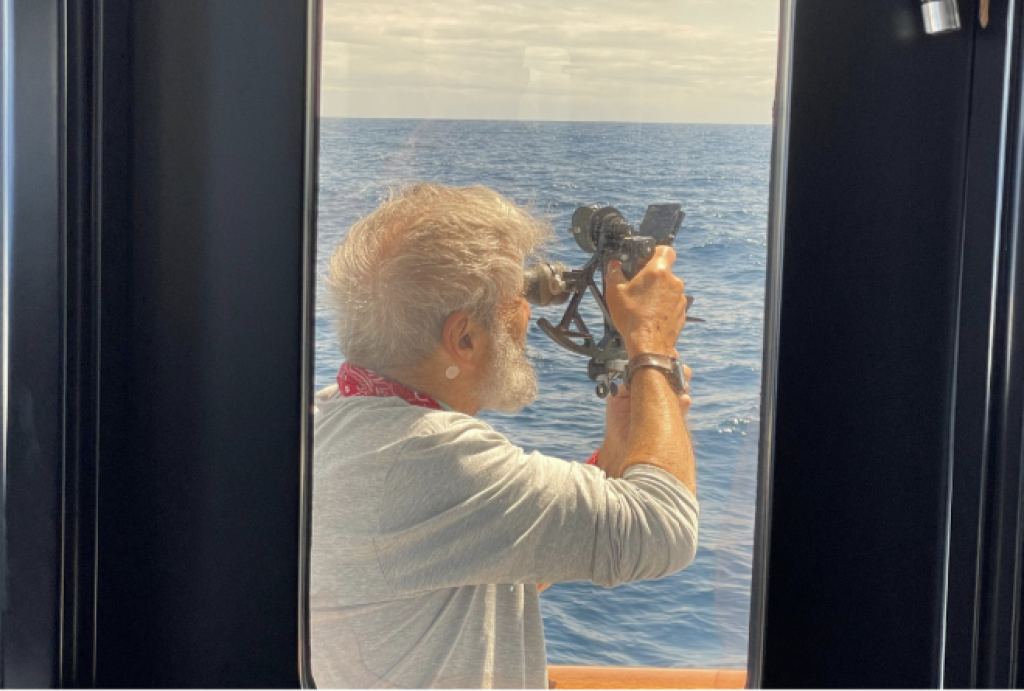
Daily, when the sky was not too overcast, and the sun was visible, the navigator — his name was George — would go on deck, take out the sextant, and point it at the sun. Then he would stop, look at his watch, peer through the telescope of the sextant again, and finally write some numbers down on a pad. He repeated this ritual at least three or four times daily.
I had no clue as to what he was doing or what magic he performed to turn those sextant observations into lines on the chart.