By: Francesco Ferri
I didn’t fully understand how fast modern life had become until I spent extended time at sea.
On land, everything moves according to schedules and expectations that are hard to measure but impossible to escape. At sea, that structure falls away. Distance, light, and weather begin to set the pace. The journey slows, and time starts to feel human again. Days are shaped by conditions.
Instead of calendars, and that alone changes how you live on board.
When you spend enough time sailing, resources stop being abstract.
Energy comes from a fixed amount of sun. Water becomes precious, especially without a watermaker.
Sailing to islands where freshwater arrives by ship makes that reality impossible to ignore. Waste does not disappear quietly either. It stays with you longer than you expect, forcing you to think carefully about what you bring aboard and what you throw away. You start reducing at the source, not because it is fashionable, but because it is necessary. The sea teaches responsibility without speeches.
Life at sea is hands-on by necessity. Things break. Systems fail. You fix what you can, when you can, with what you have. Maintenance is not a side task. It is part of daily life. Reinforcing hardware, chasing down leaks, rebuilding systems piece by piece. Working on the boat deepens your relationship with it. You stop expecting perfection and start valuing reliability. That mindset carries into everything you keep onboard. On a boat, everything has to earn its place. That includes clothing.
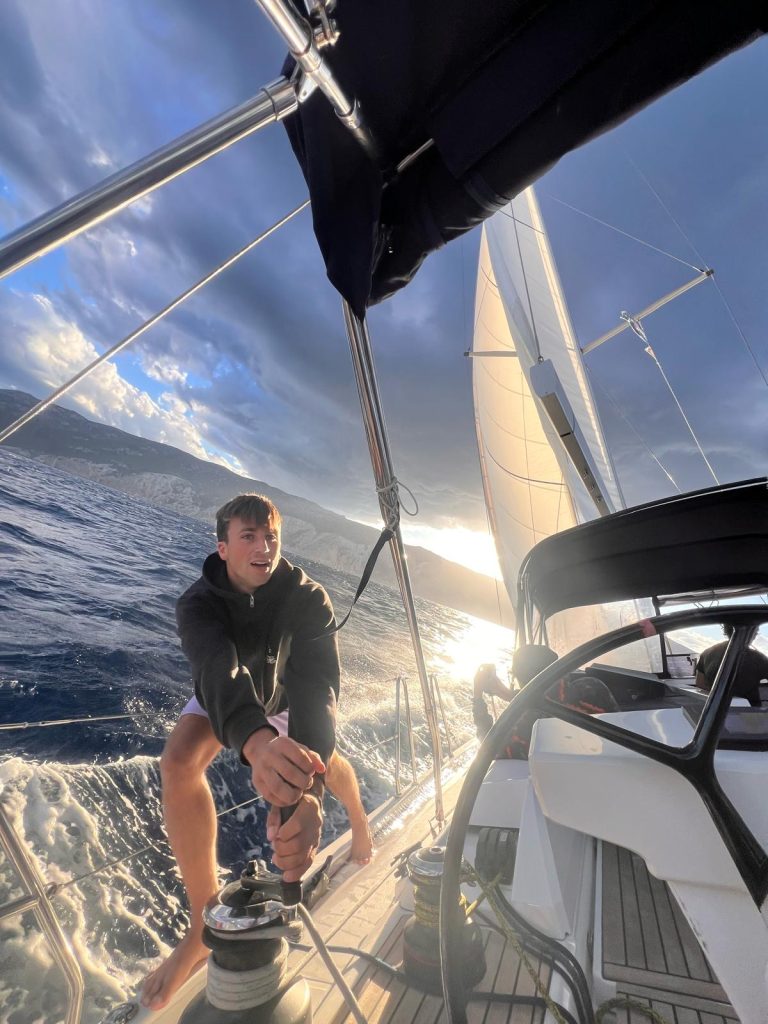
I have always gravitated toward technical, comfortable gear, but much of traditional sailing apparel feels conservative and repetitive. For years, I found myself wearing mountain hiking clothing onboard simply because it worked better. Layers matter. Durability matters. And above all, the outer shell matters. It is the difference between adapting to conditions and fighting them.
When the wind comes up or the weather turns, I reach for the same outer layer every time. It is an NW Apparel SEA-Shell jacket I was introduced to through Noire Waters, and over time, it simply earned its place onboard. In summer, it handles evening wind and passing rain. In winter, it works as a final shell over insulation, taking spray and wind without restricting movement. I do not think about it much anymore, which is probably the highest compliment gear can earn. Knowing it is made using SEAQUAL yarn from plastic recovered from the ocean adds meaning, but it is not why I wear it. I wear it because it works.
Over time, you also learn to read the sea. Temperature, clarity, clouds, swells, and currents stop being background and start becoming information. The ocean becomes legible if you are willing
to listen. That attentiveness shapes decisions before you even realize you are making them, when to move, when to wait, and how to prepare.
Time offshore changes how you carry yourself back on land. Out there, especially without communication, the safety net disappears. When something breaks, you solve the problem with what you have. You stay calm, adapt, and take responsibility. That mindset does not fade when you return to shore.
And sometimes, the sea reminds you that even with all that discipline, it still has a sense of humor. Once, sailing solo, I trailed a lure behind the boat without much expectation. A day and a half later, I found myself battling a forty-kilogram tuna for more than two hours, alone in open water. Exhausted and grateful, I brought it aboard.
The sea rewards patience. You just have to give it the time it asks for.