Inside the Inside Passage
By Wade R. Rogers
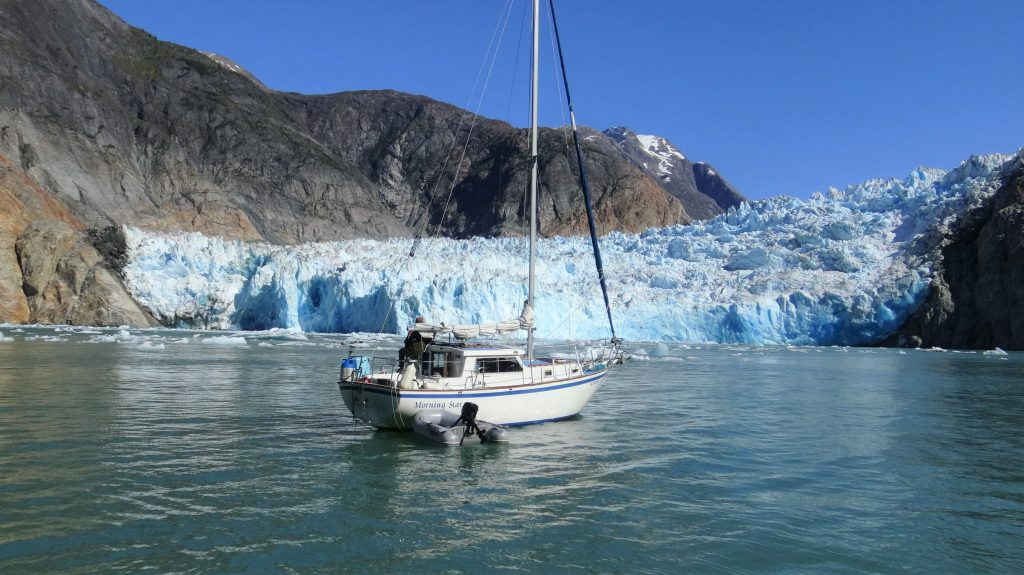
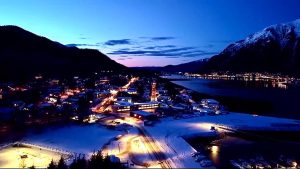
It’s on par with the largest fjords in the world, found in Norway, Greenland, Chile, and New Zealand. It encompasses an astonishing 1,000 islands and 15,000 miles of shoreline, and is surrounded by the largest intact temperate rainforest in the world, the Tongass National Rainforest. Behind it is an icefield that is 90 miles long and 40 miles wide which feeds the ocean with fresh water from 40 large valley glaciers and 100 smaller ones. Water that is vital to the health of chinook, coho, chum, and pink salmon species, which in turn nurture a vast concentration of coastal brown bears and black bears, who also feed on abundant Sitka blacktail deer, grasses, and berries.
For thousands of years, it has been the homeland of the indigenous Tlingit, Haida, and Tsimshian peoples who, like other inhabitants of this area, have lived well off its abundance. Enough abundance that its waters are the feeding grounds and summer abode for an annual migration of over 500 humpback whales, the hunting grounds for 40,000 Stellar sea lions, the birthing grounds for recovering sea otters, and the territory for about 450 resident and transient Orcas.
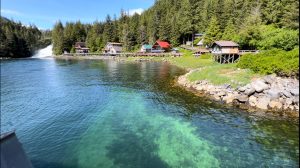
Welcome to the Inside Passage.
If you’ve dreamed of exploring the Inside Passage, your route will depend on the size of your vessel, anchoring capability, cruising speed, places you’d like to visit, your tolerance for a bumpy ride, fuel and/or water range, etc. A major consideration (and I’d be remiss if I didn’t address this) is the best time of year to make this amazing journey. As a ‘local’, I get this question from time to time. Generally, my preference is between mid-May through mid-September. June and July are our best weather months.
When coming from the Seattle area, most people travel on the east side of Vancouver Island in the Strait of Georgia and Johnston Strait to catch a break from the ocean swells and heavier weather on the outside and then exit into Queen Charlotte Sound. Now, while this is a lovely route with great places to visit, there are areas where tidal currents play a factor, especially in Johnstone Strait. Seymour Narrows comes to mind.
Once out into Queen Charlotte Sound, you have one of two choices: should we cross the entire sound in the middle, exposed to the prevailing northwesterly ocean swells or do we tuck in behind Calvert Island and begin to wend our way through more protected and scenic channels of the Inside Passage? If you’re trying to make some distance and have good weather, transiting Queen Charlotte can be done but with the added uncertainty of the prevailing NW swells and possible bad weather, a more conservative captain might pick the latter of the two options.
One of the things I want to do in this article is highlight three things that the Inside Passage does well: hot springs, old canneries, and glaciers. If, after coming out of Johnstone Strait, you tuck behind Calvert Island, you might want to consider wending your way to Bella Bella, a small community of some 1500 that has a fuel dock, water, and as I recall, a small grocery store. I once sailed up to the fuel dock here after my skipper and I ran out of fuel and had to sail the rest of the way.