

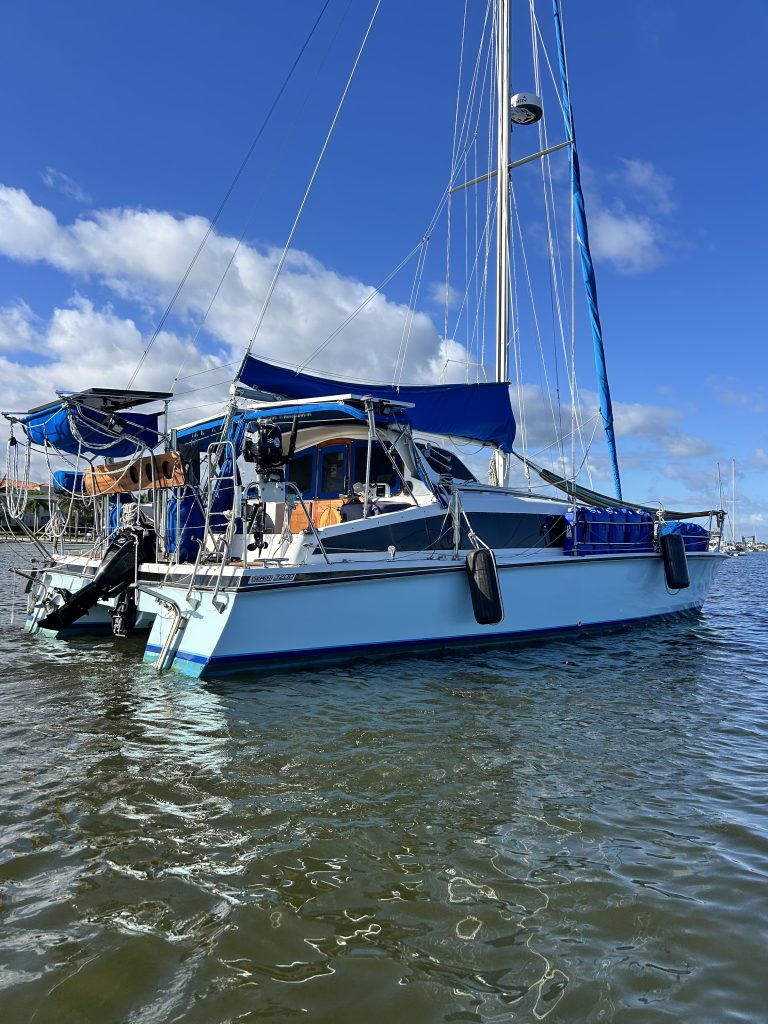
Avast ye scallywags. Scuttlebutt has it ye landlubbers be looking to weigh anchor, hoist ye Jolly Rogers and sail the seven seas looking for pirate booty…
…but first you need to learn the lingo.
- That’s not how we talk.
When we started cruising, we were green as green can get. We didn’t know anything about sailing, boat maintenance, planning passages, predicting weather, or TALKING the TALK.
You can learn to sail by taking sailing lessons like the ASA101. There are books upon books for planning trips and passages. There are more apps than you can imagine for predicting the weather, and thousands of YouTube videos on boat maintenance. All of which we have done and used, but where, oh” where do you learn to talk like an old salt, to speak the language used by seasoned sailors and boaters alike? Let’s see if we can help.
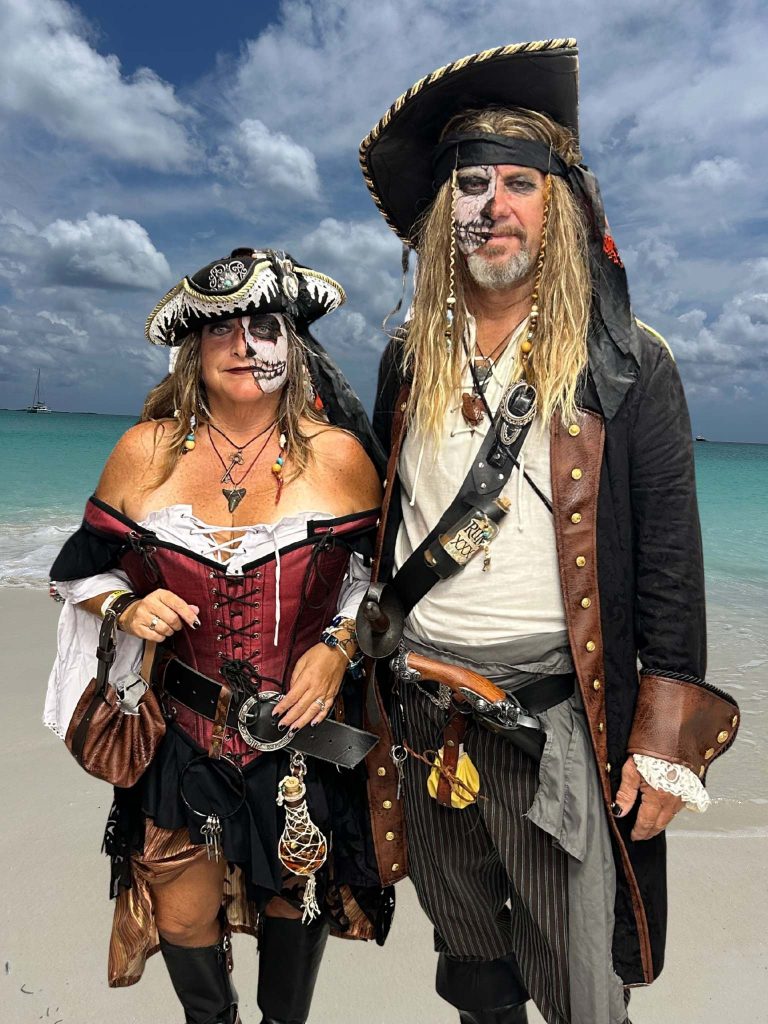
Hello, my name is Capt. Ken and my wife, Miss Kelly, and I have been living and cruising on our sailboat, ‘The Crooked Anchor,’ full-time for almost 7 years. We started out like most people do, with a tiny dream, a little bit of money, and a lot of determination.
Did you know sailors and boaters had a language all their own? Neither did we. For years, we spoke greenhorn. The words we used and the things we did let everyone know we were new to boating, that we were inexperienced beginners.
Our first introduction to the boating language and not the typical pirate talk you see in movies (or like the first paragraph in our story). It was boat bumpers or floats as most newbies would call them. You know, those floaty things you see hanging over the side of a boat. They are to stop your boat from getting damaged by it banging against a dock or seawall. You can always tell who a newbie is because they never bring them back in the boat when they leave the dock. We did this.
We left the dock with our “fenders”(what they are really called) tied to our lifelines and hanging on the side of our boat. We didn’t realize it until we got to our next destination. We had sailed like this all day; all the while, other boaters kept staring at us, and we thought they were very polite. They would turn their boat and give us plenty of passing room, even let us go first when docking. We thought boaters were really kind, and maybe they liked our boat.
Turns out everyone knew we were new to boating by us having our fenders out while traveling. They weren’t staring at our boat; they were staring at our fenders. It gave us away as beginners, as newbies. It reflected our inexperience and greenness and showed we were unseasoned.
They gave us room and let us go first because they didn’t want the newbies to run into their boat. They didn’t want to crowd us and make us nervous, which leads to mistakes being made. We give way to new boaters, and this is something we do to this day. We don’t do it to be mean, we do it to give space to the beginners, to allow them to get the needed experience in so they can become confident in boat handling. We now know that boaters are some of the best people you will ever meet. So always pull your bumpers inside your boat while underway, and remember they are called FENDERS.
That being said, we wanted to share some more of the unwritten boating language that we have learned over the years. Maybe it will help with your transition into becoming more fluent and confident when talking to old salts.
These are just a few of the words and phrases we have learned over the years. There are plenty more we don’t know, as we are still learning ourselves. ENJOY.
Well, let’s start with oldies but goodies.
Scallywag: a person who misbehaves badly in an amusing or mischievous rather than a harmful way; a rascal, if you will.
Scuttlebutt: meaning rumors, gossip, or unofficial news, similar to water cooler talk today. The things you might hear on the dock or at a bar.
Landlubbers: a person unfamiliar with the sea or sailing. Sailors call anyone who lives in a house a landlubber.
Jolly Rogers: refers to any flag raised by privateers or pirates. Most notably, a black flag with white skull and crossbones.
Booty: treasure or valuable stolen goods or money. Pirates are always looking for booty. (no pun intended).
Surprisingly, these words are still used even today, but not as often.
Here are some words and phrases that are spoken often and are used daily by sailors, cruisers, and boaters alike.
Ahoy: used to hail a ship or get someone’s attention. We use this when approaching another boat on anchor or at the dock to let them know we are outside.
Rode: is the line that connects the anchor to the boat. It can be a chain, rope, or a combination of both. If I ask how much rode you have out? I want to know how far away from your boat your anchor is.
On the hook: meaning having your boat anchored. The hook is your anchor. You say: We dropped the hook in a small bay. Use a hook when referring to your anchor.
Up the stick: referring to your mast. The stick is your mast. You say: I went up the stick today to fix the anchor light. Meaning you climbed the mast to fix your light.
Running the ditch: referring to the Intracoastal Waterway or ICW, as some say. The ditch is the ICW. If someone says: We ran the ditch today all the way to Sebastian. Meaning they navigated the ICW up to Sebastian.
On the hard: meaning your boat is on land, usually in a boatyard on blocks or stands. You say: We’re going on the hard for a bottom job? Meaning your boat will be dry-docked on land to paint the bottom of it.
Ground tackle: referring to your anchor, chain, and rode (rope or line). When asked, ” What kind of ground tackle are you running? You tell what kind of anchor you have and how much chain and or rope is attached to it.
Old salt: referring to someone who has a lot of experience with the sea, boating, sailing, or cruising. You say: He looks like an old salt or is an old salt. Meaning you can see the experience of life on the water in him.
Coconut telegraph: an unofficial and unreliable grapevine where news and gossip spread by word-of-mouth, usually from dock to dock or boat to boat. You say: I heard it on the coconut telegraph. Meaning you heard it, but you’re not sure where it came from. Made popular by a Jimmy Buffett song by the same name.
And lastly:
Cruising: definition: fixing boats in exotic places.
Meaning boats break down from time to time, and when they do, it is usually in a place where parts or a mechanic are hard to find.
We hope you enjoy these and can use them in confidence. These are only a few words we wanted to share. There are many more. We are still learning more all the time.
In closing, “Always be yourself, unless you can be a pirate. Then always be a pirate.”
We still sail today, enjoying all that this lifestyle has to offer. If you see us out there, be sure to say, Ahoy!
Fair winds and following seas from Capt. Ken, Miss Kelly, and The Crooked Anchor. Follow us on YouTube, Facebook, Instagram, and TikTok @SVTheCrookedAnchor.


This Post Has One Comment
Thoroughly enjoyed this article. Your never to old to learn a thing or two. Happy Cruse-in